
System Inspection
Industrial Air Filtration System Inspections Across Texas
Know how your filtration system is performing and what needs attention. Air Quality Systems inspects airflow, pressure levels, and equipment condition so you can plan adjustments, maintenance, or further investigation.
Based in Allen, we serve industrial facilities throughout Texas. Request a single inspection or discuss recurring visits around your operating schedule.
Check Your Dust, Fume, and Mist Collection Performance
Weak extraction, unexpected pressure changes, and escaping dust or mist deserve investigation. We evaluate performance against your current operating demands and recommend next steps.
Baghouse and Cartridge Collectors
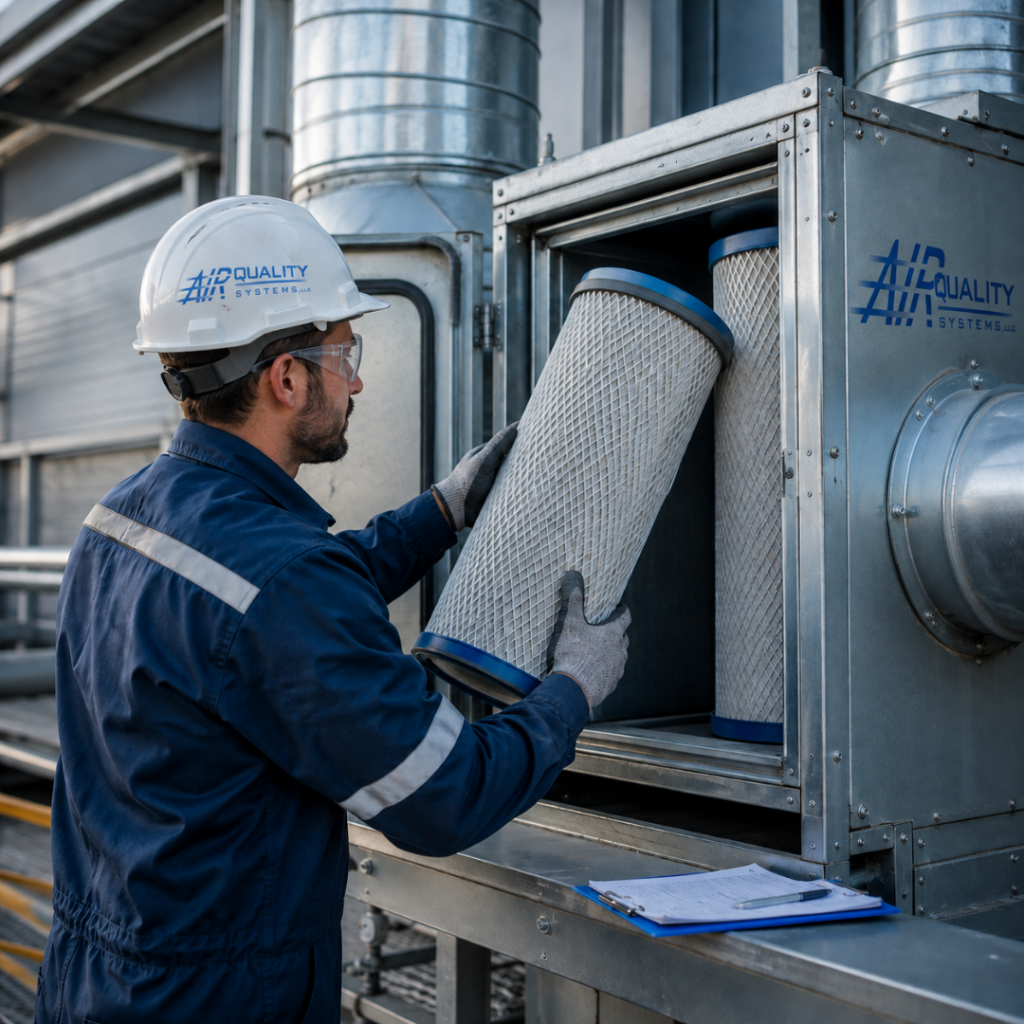
Our baghouse inspections assess dust collection performance before you decide whether filters or other components need attention.
- Evaluate airflow, pressure readings, and overall condition.
- Identify concerns that warrant closer investigation of filtration, cleaning, or dust discharge.
Welding Fume Extraction Systems
Check the equipment serving your welding stations. Our welding fume extraction system inspections focus on airflow and system condition, taking changes in workstations and production into account.
Industrial Mist and Oil Mist Collectors
Review collection performance for machining operations. Industrial mist collector inspections consider the equipment and application; oil mist collector inspections also need to account for captured-liquid drainage.
We establish the checks for your equipment before the visit. Inspection findings guide recommendations; repairs and replacement components depend on the agreed scope.
Put Recurring Inspections on Your Production Calendar
Discuss monthly or quarterly visits based on your system’s demands. Set the interval around:
- Operating hours and contaminant loading.
- Manufacturer guidance and applicable facility requirements.
- Previous findings and recurring performance problems.
Continue routine operator checks between visits. Arrange an earlier assessment after unexpected performance changes or changes to connected production equipment. A recurring schedule should respond to operating conditions, not delay attention to a developing problem.
Make Maintenance Decisions With Equipment Specialists
Authorized Donaldson Torit Dealer
Work with a dealer familiar with industrial collection equipment, filters, and parts.
Design and Troubleshooting Experience
We compare operating requirements with system capabilities to investigate performance concerns.
Support Beyond the Inspection
Access maintenance, troubleshooting, and replacement of components when findings call for additional work.
Our work spans system design, installation, and ongoing support, helping us consider how the collector serves your operation when recommending what to investigate or address next.
Schedule Your Facility’s Inspection
Tell us your facility location, collector type, and current concerns. We’ll discuss the inspection scope and scheduling, including recurring visits if needed. Have the equipment model and any recent readings available to make the conversation more useful.
Frequently Asked Questions
FAQs
1. What affects the cost of an industrial filtration inspection?
Equipment type, number of units, access, and the agreed checks affect the quote. Share model details and available performance records so we can discuss your requirements.
2. Will production need to stop during the inspection?
Some measurements require the system to operate. Internal checks may require shutdown and equipment isolation. Discuss production constraints when arranging the visit.
3. Does a welding fume inspection include worker exposure testing?
An extraction-system inspection assesses equipment performance. Personal exposure testing measures what workers breathe and requires a separate sampling scope. Confirm any exposure-testing needs before booking.
4. What if I do not have the original system drawings?
Share the collector make, model, photographs, and available maintenance records. These help establish the equipment and proposed scope; missing design information may require additional investigation.